Stadt Lahr Sommer Sonne Hitze

Watch out for sun and heat!

For meteorologists, summer begins on June 1 and ends on August 31; according to the calendar, it begins on June 21 and ends on September 21—and it seems to start earlier and earlier and last longer and longer. There are more summer days and hot days—and especially tropical nights—as well as longer dry spells and less summer rainfall. This affects not only the landscape and nature but also people. Below you’ll find a collection of tips and advice for dealing with heat waves.

The climate is changing - how to protect your health

Picture climate change shown
Source: BZgA

You’ve probably noticed it, too: The number of hot days in Germany is steadily increasing due to climate change. At first glance, this sounds like more sunny days with blue skies and perfect weather for swimming. But the consequences are increasingly frequent heat waves with temperatures exceeding 30 degrees, as well as tropical nights when the temperature remains at least 20 degrees.

It’s not just the heat that can pose a threat to our health. The risk of developing skin cancer, respiratory diseases, allergic conditions, or infectious diseases can also increase. An explanatory video from the Federal Center for Health Education explains why this is the case and which specific health risks are exacerbated by climate change. To prevent hot days from leading to health problems, another video from the Federal Center for Health Education offers helpful recommendations for everyday life.

The German Weather Service issues heat warnings for days when the heat may pose a health risk. Various criteria are taken into account when issuing these warnings, including heat stress levels during the day and at night. In the “Heat Trend” section, you can see how heat stress is expected to develop over the next five days. Due to greater uncertainties in the forecast, the information here is less detailed and may change from one forecast to the next.

The Heat Guide provides simple yet concrete advice on what to do in the event of a heat hazard, offers recommendations for heat protection, and much more. It’s worth a look!

Information from the former Medical Center for Quality in Medicine on heat protection in other languages: Arabic (تغير المناخ والصحة), English (Climate Change and Health), French (Changement climatique et santé), Russian (Изменение климата и здоровье), Spanish (El cambio climático y la salud), and Turkish (İklim Değişikliği ve Sağlık).

Heat protection tips - recommendations for everyday life
Source: BMG and BZgA

Here you will find further information from various levels of government:

When enjoyed in moderation, sunlight promotes blood flow and circulation and enhances well-being. In excess, however, high-energy UV radiation in particular can be harmful to health. The tan that develops on the skin when exposed to strong UV radiation from the sun or a tanning bed is the body’s first protective response. If the body is not properly protected, sunburn can occur, which can lead to chronic skin damage such as skin cancer. To protect your health, you should follow the tips for protecting yourself from UV radiation. The UV Index (forecast) indicates how “sunburn-prone” the sun is.

Ozone is a gaseous substance that, in higher concentrations, can cause irritation of the respiratory tract and eyes in humans and animals. Ozone concentrations rise in the summer when air temperatures are high and solar radiation is intense. The latest ozone readings from air monitoring stations are promptly made available on the website of the Baden-Württemberg State Agency for the Environment.

The image shows a glass filled with water; the words “Trink Was(er)” are written at the top, and “hier gratis” is written below the image. This logo indicates where drinking water is available for free in Lahr.
Drink Some Water
Source: City of Lahr

To get through hot days, it’s especially important to drink enough, particularly in the heat hotspots of city centers. Through the “TRINK WAS(SER)” campaign, the city of Lahr, in cooperation with local businesses, is providing free drinking water. Participating businesses display the logo to indicate that they offer drinking water even to non-customers. The Lahr city map provides an overview of participating businesses and government offices, as well as public drinking fountains.

Map overview of where there are cool places in the city.
Cool places

The number of hot days is increasing in Lahr, and the high temperatures are taking a toll on people. However, within the built-up area of the city of Lahr, there are also a few “climate oases” that are slightly cooler than the surrounding area. These can include churches with their thick walls, shady green spaces, and places where water helps keep the air cool. The Lahr city map provides an overview of these cooler spots—indoors, outdoors, and near or on the water.

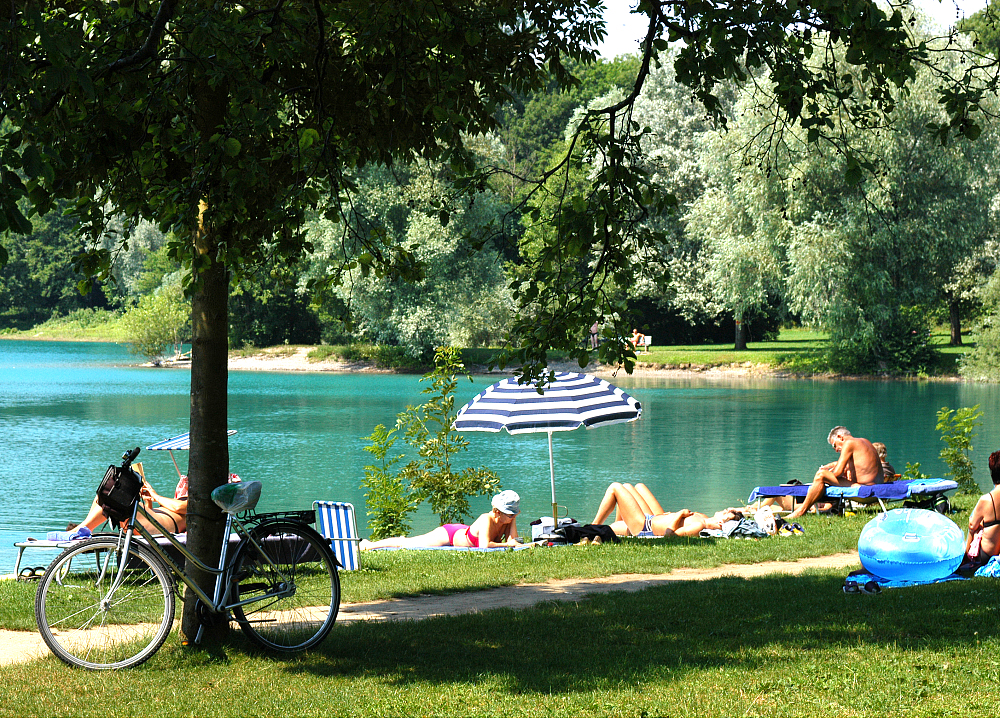
The picture shows the Waldmattensee lake in Kippenheimweiler. On the shore of the quarry pond, which is framed by trees, some people in swimwear are lying in the sun or under parasols. A bicycle is leaning against a tree.
The Waldmattensee
Source: City of Lahr

Bathing waters are regularly tested for quality by the State Health Department in accordance with the Bathing Water Ordinance. In addition to the guideline and limit values for microbiological parameters that must be met, the water must have a visibility depth of at least one meter. The bathing water map provides an overview of the reported bathing waters in Baden-Württemberg that are regularly tested for microbiological contamination (e.g., Waldmattensee in Lahr).

If you have a drinking water connection, you should also use it to fill garden pools. When the pool is emptied, the water must be taken to the sewage treatment plant for purification. Discharge into a body of water, including via the rainwater drainage system, or seepage into your own garden is not permitted. Even if the pool water has not been chemically treated, for example with chlorine, the water is contaminated as a result of bathing.

Forest fire danger sign
Forest Fire Danger Sign

There is a high risk of forest and vegetation fires in the Ortenau district(forest fire risk index, grassland fire index). People who go into the forest or grassland must be particularly careful to prevent fires.

  • Smoking is prohibited in the forest from March 1 to October 31.
  • Only use officially established barbecue and fireplaces. Check the forest fire danger index beforehand; if the danger level is 4 or 5, please refrain from using fires. Make sure that the fire is completely extinguished when you leave the barbecue/fireplace and never leave the fire unattended.
  • Open fires outside the forest must always be at least 100 meters away from the edge of the forest.
  • Do not park vehicles on grass or meadows, hot vehicle parts can ignite the vegetation.
  • Always keep access roads into the forest and forest paths clear for emergency services.
  • If you discover a fire in the forest, do not put yourself in danger and call the fire department immediately on 112.
Dog sitting in the pool
Dog in the Pool

Dogs and cats do not sweat and can only compensate for high outside temperatures to a limited extent. Providing fresh water and allowing them to retreat to cool and shady places will help them to feel better. Walks with the dog or outdoor walks for the cat should be moved to the cooler morning or evening hours. Asphalt paths and roads in particular can become very hot in the sun and "burn" dogs' paws.

Do not leave pets alone in the car in hot weather, even for a short time with the windows partially open. The inside of a parked car can heat up to well over 40 degrees Celsius within a few minutes and then the pet is at risk of a life-threatening heat stroke.

When temperatures rise in summer, maggots may develop in the gray garbage cans. The maggots in the gray garbage can are usually the larvae of houseflies and blowflies. They specifically seek out food waste, garbage and excrement and lay their eggs in them. At appropriate temperatures, the maggots of houseflies, for example, can hatch just twelve hours after laying their eggs. They feed on the waste, live in it for a few days and then pupate. Under favorable conditions, a new, sexually mature generation of flies can grow within a waste disposal cycle of fourteen days.

The following measures can help against maggots in the garbage can:

  • The development of maggots from egg to adult fly is temperature-dependent. The cooler the temperature, the slower the development. The garbage can should therefore be kept as cool as possible throughout the summer and preferably placed in the shade.
  • Flies are particularly attracted to protein-containing food waste such as sausage, meat and cheese waste because of the smell. For this reason, these - and all other waste - should not be placed openly in the residual waste garbage can in summer, but only in well-tied bin liners. Simply wrapping this waste in newspaper is not sufficient.
  • Waste sticking to the bottom of the bin can prove to be a breeding ground for maggots. To avoid this, the garbage can should be cleaned every now and then after emptying. This will prevent the formation of odors and maggots.
  • Clamping a piece of wood between the garbage can and lid prevents excessive heat and water vapor build-up, but opens the door to flies and invites them to lay their eggs. It is therefore better to keep the lid closed if it is not ensured that the waste is placed in the garbage can in knotted bin liners.
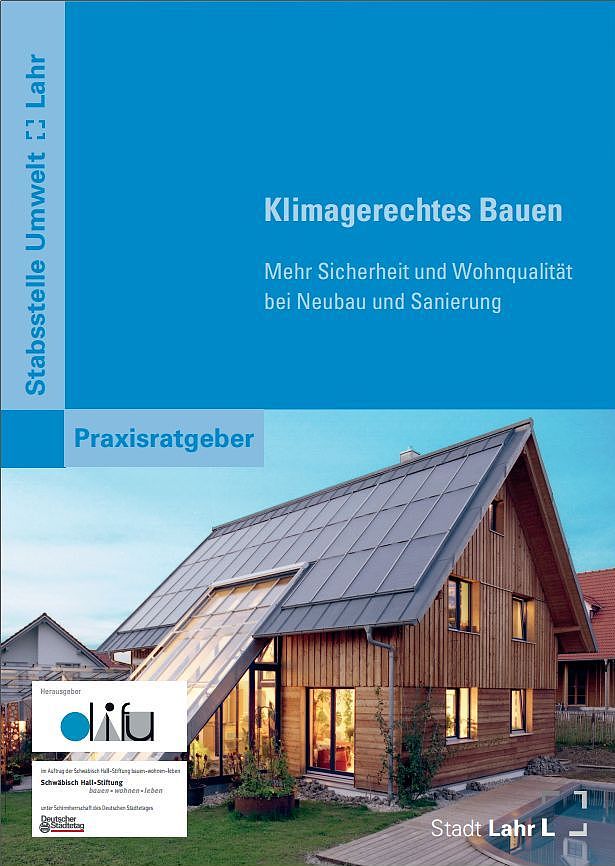
Shown here is the cover of the guide to climate-friendly construction.
Practical guide to climate-friendly building
Source: City of Lahr

The climate risk analysis for Lahr clearly shows that Lahr will become even warmer and drier in the future. Extreme events, such as droughts and heat waves, will become more intense and frequent. The current situation regarding heavy rain and storms is not entirely clear, but a slight increase is expected here as well. Overall, the temperature forecasts are very robust, whereas the precipitation-based model predictions are subject to greater uncertainties.

It is therefore becoming increasingly important to address the issue of climate adaptation in your own community. The practical guide *Climate-Just Construction* from the German Institute for Urban Studies (also available for pickup at City Hall 2 and local administrative offices) describes problem areas that homeowners are highly likely to encounter. To be well prepared for the risks posed by extreme heat, heavy rain, and storms, the guide suggests appropriate structural and technical preventive measures. It doesn’t matter whether a house or apartment is being newly built, purchased, renovated, or remodeled—climate-resilient construction is worthwhile in every case. A checklist provides an overview of which measures for a climate-adapted new construction or renovation have already been planned or implemented, and in which areas there may still be a need for action. In addition, suggestions are provided regarding financing and grant opportunities. By thoughtfully combining these measures and leveraging the synergies highlighted in the guide, you can protect both your property and the climate.

In Lahr, too, human-induced climate change is leading to increasingly frequent, longer, and more intense heat waves (Climate Fact Sheet and Climate Profile of Lahr). Heat-related health protection is therefore important to safeguard the population and high-risk groups from the negative effects of heat.

A municipal heat action plan is a comprehensive strategy that brings together all measures for managing heat-related risks in order to respond to and reduce heat-related health risks. The City of Lahr’s dynamic heat action plan aims, on the one hand, to encourage the population to adopt heat-adaptive behaviors and, on the other hand, to adapt living and working environments to the heat.